
Introduction
Post payment audit revolves around reviewing transactions after payments have been made and identifying discrepancies to enhance financial management, compliance, and operational efficiency.
A well-executed post-payment audit can lead recover large amounts for businesses, making it essential for financial health. Here are the key strategies, the importance of post-payment audits, and the best practices organisations can adopt to maximise their benefits.
Why is a Post-Payment Audit Important?
- Financial Accuracy: Payment errors, duplicate payments, negligence, fraud, and overpayments can severely impact profit margins. A post-payment audit detects these discrepancies, helping to correct errors and reclaim overpaid amounts.
- Enhanced Controls: Engaging in regular post-payment audits establishes a stronger framework for financial controls, improves accountability, and reduces fraudulent actions.
- Operational Efficiency: Following patterns of discrepancies can highlight inefficiencies within procurement or accounts payable processes, prompting organisations to refine their operations.
- Regulatory Compliance: Many industries are subject to stringent financial regulations. A post-payment audit ensures compliance with these regulations, protecting organisations from potential penalties.
- Supplier Relationships: Identifying and addressing discrepancies through post-payment audits promotes transparency and honesty in supplier relationships, building long-term trust-based partnerships.
Key Strategies for Effective Post-Payment Audits
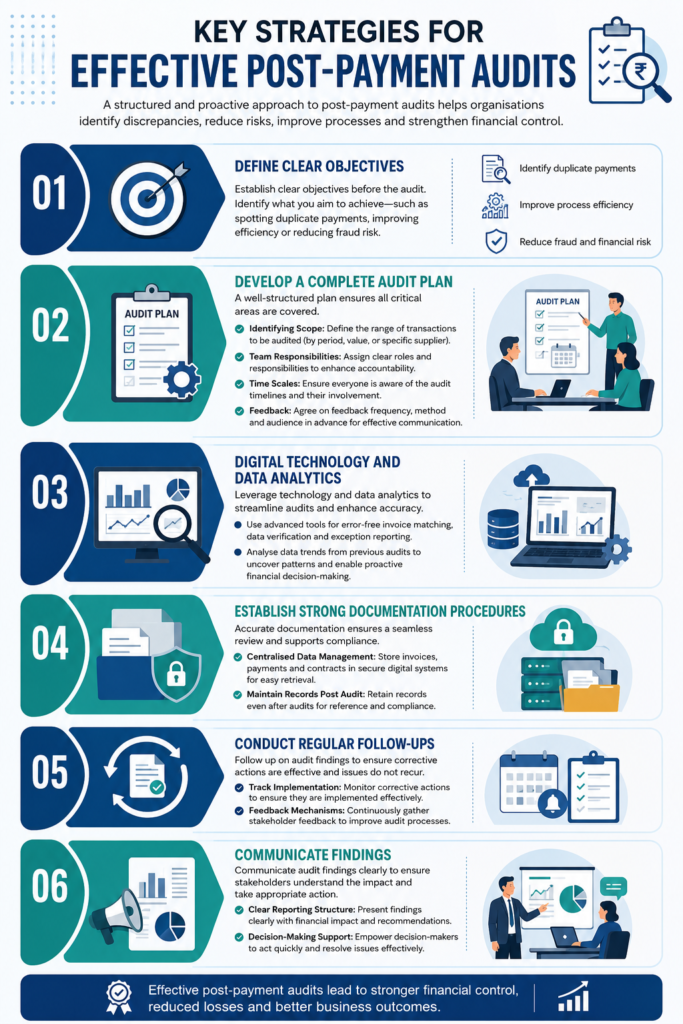
1. Define Clear Objectives
Before conducting a post-payment audit, it is essential to establish clear objectives. What are you looking to achieve? This could range from identifying duplicate payments, process inefficiencies to reducing the potential for fraud. By setting specific goals, you can align the audit approach with organisational needs.
2. Develop a Complete Audit Plan
A systematic audit plan helps ensure that all critical areas are covered during the post-payment audit. This involves:
- Identifying Scope: Determine the range of transactions to be audited. This could be by period, value point, or specific supplier.
- Team Responsibilities: Assign roles and responsibilities to team members involved in the audit process to enhance accountability. Nominate a project manager or point of contact on both sides to ensure a smooth workflow
- Time Scales – Ensure that everyone is aware of the audit timings and when they may be required within the project
- Feedback – Ensure feedback frequency, method of delivery and audience are all agreed in advance. This ensures feedback is effective and provides all the key details.
3. Digital Technology and Data Analytics
Always consult with the best audit firms using advanced technology and data analytics to streamline your post-payment audit practices.
- Best Tools: Audit Partnership provides custom digital solutions that regulate error-free invoice matching, data verification, and exception reporting. This process reduces manual errors, speeds up audits, and improves accuracy.
- Data Trends Analysis: Analysing data trends from previous audits can uncover patterns that require deeper investigation. This proactive approach provides insights that can lead to better financial decision-making.
4. Establish Strong Documentation Procedures
Accurate documentation is vital in the post-payment audit process. Ensuring that all invoices, contracts, and correspondence are well-documented allows for a seamless review process.
- Centralised Data Management: Log invoices and payments using centralised and secure digital storage systems. This facilitates easy retrieval during audits.
- Maintaining Records Post Audit: Ensure records are retained even after audits are completed for reference and compliance purposes.
5. Conduct Regular Follow-Ups
Regular follow-ups on the completion of post-payment audits can significantly enhance their effectiveness. After discrepancies are identified, it’s crucial to implement corrective actions.
- Track Implementation: Monitor the implementation of corrective strategies to verify effectiveness and prevent recurrence.
- Feedback Mechanisms: Establish feedback loops to improve audit processes continuously. Engaging with stakeholders to gather their input can improve additional areas for improvement.
6. Communicate Findings
Effective communication of audit findings is essential to ensure stakeholders understand the implications of discrepancies discovered during a post-payment audit.
- Clear Reporting Structure: Create a reporting structure that presents findings clearly and concisely, highlighting the financial impact and recommendations for resolution.
- Decision-Making Support: Ensure that your reports enable decision-makers to take quick, informed actions that address identified concerns.
APLX: Epicentre of Strong Audit Services
At APLX, we position ourselves at the epicentre of strong audit services by going beyond recovery to deliver real value. Post-payment audits are not just about identifying duplicate payments or errors; they are about creating resilience, building financial transparency, and strengthening governance.
With over two decades of expertise, we combine deep industry knowledge, advanced analytics, and our proprietary Capture™ technology to detect errors and prevent future leakage. Our supplier-friendly approach ensures recoveries are achieved without damaging vital relationships.
By embedding best practices into every audit cycle, we help businesses transform post-payment reviews into proactive revenue protection strategies. This makes Audit Partnership a trusted partner in safeguarding margins and driving long-term financial sustainability.
Conclusion
A successful post-payment audit can provide clarity about your organisation’s financial health and operational improvements. By establishing best practices, new technology, and stable ongoing collaboration, businesses can significantly enhance their audit processes. At Audit Partnership, we are dedicated to supporting organisations in maximising their audit functions and helping them achieve better financial outcomes.
FAQs
1. What is a post-payment audit?
A post-payment audit is a financial review conducted after payments have been made to ensure accuracy and compliance and identify disparities in transactions.
2. Why is post-payment audit important for businesses?
Post-payment audits are vital for financial accuracy, fraud prevention, operational efficiency improvement, regulatory compliance, and strong supplier relationships.
3. What technologies can enhance post-payment audits?
Advanced tools and data analytics platforms can significantly streamline the post-payment audit process by improving accuracy, reducing manual errors, and enabling faster data processing.
4. How can an organisation ensure effective documentation during audits?
Organisations should implement centralised data management systems and maintain comprehensive invoices, contracts, and communications records to enable seamless reviews during post-payment audits.
5. How often should post-payment audits be conducted?
The frequency of post-payment audits depends on the volume of transactions and industry standards; however, regular audits are advisable to minimise the risk of recurring discrepancies and ensure ongoing compliance.